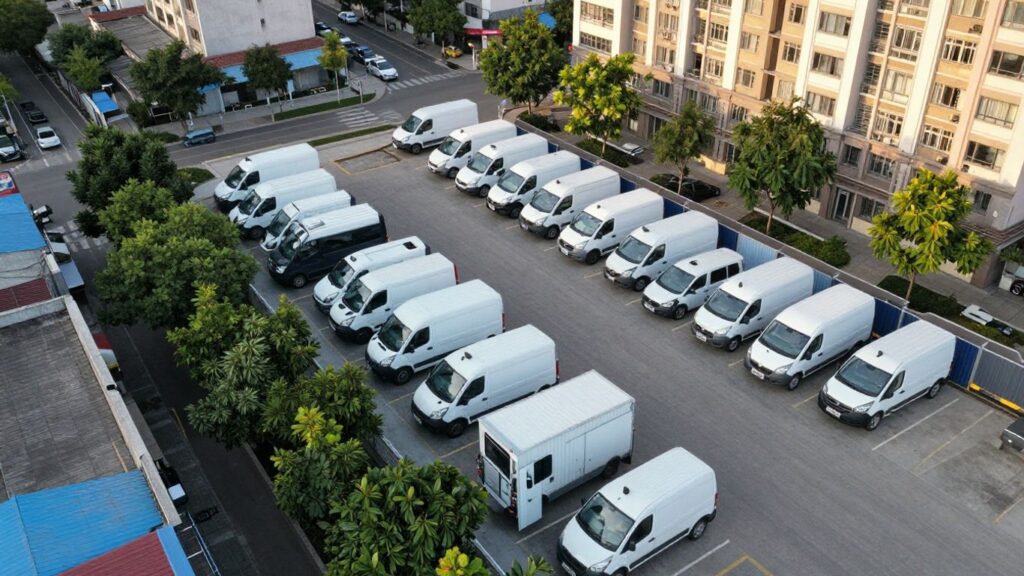
Understanding fleet routing optimization
Fleet routing optimization is the process of arranging vehicles, stops, timing, and constraints so that a delivery operation works efficiently in the real world. We are not simply looking for the shortest line between two points. We are balancing distance with traffic, delivery windows, vehicle limits, driver availability, loading conditions, and the service experience we promise customers.
How route optimization differs from route planning
Route planning usually creates a route before a vehicle leaves the depot. Route optimization goes further by comparing many possible sequences and assigning stops in a way that fits the operation’s constraints. We can plan a route manually, but optimization asks whether the overall set of routes is the best practical use of the available vehicles and time.
A good plan also leaves room for change. If a road closes, a customer becomes unavailable, or a vehicle falls behind schedule, we need a way to adjust without disrupting every remaining stop.
The operational problems it solves
Poor routing tends to create small inefficiencies that compound across a fleet. Drivers may cross the same area more than once, vehicles may carry an unsuitable load, and dispatchers may spend the day reacting to problems that could have been avoided during planning.
Optimization helps us address unnecessary mileage, uneven workloads, late arrivals, excessive idle time, and poorly sequenced stops. It can also make the handoff between warehouse, dispatch, driver, and customer service teams clearer because everyone is working from a more consistent plan.
Key factors that influence route quality
A route is only as useful as the assumptions behind it. The shortest route may be unsuitable if it includes a low-clearance road, ignores a delivery window, or gives a driver more work than can reasonably be completed during a shift.
When we assess route quality, we usually consider:
- Total travel distance and expected driving time
- Stop sequence and the time required at each location
- Vehicle capacity, load order, and access restrictions
- Customer time windows and priority requirements
These factors should be weighed together rather than treated as separate checks. A slightly longer route can be better if it reduces missed windows, simplifies loading, or creates a safer and more predictable day for the driver.
When manual routing becomes inefficient
Manual routing can work for a small operation with familiar streets, stable demand, and a handful of stops. It becomes harder when the number of vehicles or daily deliveries grows, particularly when dispatchers must account for different capacities, service times, depots, and driver schedules at once.
The warning signs are familiar: routes are rebuilt repeatedly, dispatchers rely on personal knowledge, changes are communicated by phone, and the team cannot explain why one route was chosen over another. At that point, a structured process can reduce dependence on individual memory without removing human judgement.
Gathering the data needed for better routes
Good routing begins with accurate operational data. Software cannot correct a wrong address, an outdated vehicle capacity, or an unrealistic service time simply because the calculation looks precise. We should first decide which information affects the route, then establish how it will be collected, checked, and updated.
The aim is not to gather every possible data point. It is to create a dependable operating picture that reflects what actually happens on the road, including the exceptions that regularly affect urban deliveries.
Vehicle locations, capacities, and operating costs
We need to know where vehicles start and finish, how much they can carry, and what kinds of loads they can accept. Dimensions, weight limits, refrigeration needs, loading order, and access requirements can all change which vehicle is suitable for a group of stops.
Operating cost information gives the route a practical financial context. Fuel use, tolls, labour time, parking, and maintenance exposure may matter more than raw distance, especially when a short route involves slow streets, difficult loading areas, or repeated stops.
Customer time windows and service requirements
A delivery address alone is not enough. We should record when the customer can receive the order, how long the handoff normally takes, whether special equipment is needed, and whether the location has restrictions such as a loading bay or a narrow access road.
Service requirements should be written in a form that dispatchers and drivers can use consistently. Vague notes create avoidable surprises, while clear requirements help the route reflect the real work at the stop rather than just the drive to it.
Driver availability, skills, and regulations
Routes must fit the people completing them. Availability, shift length, breaks, training, vehicle familiarity, and any required skills can affect assignment decisions. We also need to account for applicable driving, working-time, vehicle, and local access rules rather than treating compliance as an afterthought.
This is where operational knowledge remains valuable. A mathematical route can still be impractical if it ignores a driver’s start location, a known depot process, or a restriction that is not captured in the address record.
Using telematics and historical delivery data
Telematics and historical delivery records can show the difference between planned and actual performance. We can compare arrival times, dwell time, travel speed, idling, route deviations, and completed stops to identify assumptions that need revision.
Historical data should be interpreted carefully. A delay caused by an unusual event should not automatically become a permanent route rule, but a repeated pattern around a particular time or location deserves attention. Over time, this evidence helps us use realistic travel and service estimates.
Choosing the right routing strategy
There is no single routing strategy that suits every fleet. A regular parcel operation, a same-day urban service, and a field team with appointment-based visits may all need different levels of flexibility.
We should choose the simplest approach that handles the operation honestly. The right strategy protects service commitments while leaving enough room to respond when demand, traffic, or vehicle availability changes.
Static routes for predictable operations
Static routes are useful when demand, territories, and schedules are stable. A driver or vehicle may serve a familiar group of stops on a recurring basis, which can make loading, customer communication, and daily preparation easier.
The risk is allowing a familiar route to become permanent without reviewing it. Customer locations change, traffic patterns shift, and stop volumes move between areas. Even a static route needs periodic checks to confirm that its original assumptions still hold.
Dynamic routing for changing conditions
Dynamic routing adjusts the plan as new information arrives. It can be useful when orders come in throughout the day, customers change availability, vehicles experience delays, or traffic conditions alter expected arrival times.
Flexibility should not mean constant disruption. We need clear rules for when a route may be changed, who approves the change, and how drivers and customers are informed. Without those rules, frequent replanning can create confusion instead of efficiency.
Multi-stop delivery and pickup planning
Multi-stop work requires more than placing destinations in geographical order. We must consider vehicle capacity, load sequence, collection obligations, delivery windows, and the effect of each stop on the remaining space and schedule.
Pickups can make the problem more complex because available capacity changes during the route. We should model the movement of goods where possible, so a vehicle does not arrive at a collection point with insufficient room or an awkward load arrangement.
Balancing speed, distance, and service quality
The fastest route is not always the best route. A plan that saves driving time but produces rushed handoffs, unsafe parking decisions, or missed appointment windows may increase the wider cost of the operation.
We should define what success means before comparing alternatives. Some fleets may prioritise reliable arrival times, while others may focus on reducing empty kilometres, increasing stops per shift, or protecting a premium service promise. Clear priorities make trade-offs easier to explain.
Evaluating fleet routing optimization software
Software should support a well-defined operating process, not hide an unclear one. Before choosing a tool, we should describe how orders enter the system, how routes are approved, how changes reach drivers, and which results the operation needs to monitor.
The strongest evaluation is practical. We can test representative routes, unusual constraints, peak-day volumes, and common exceptions rather than relying only on a polished demonstration.
Essential planning and dispatch features
A useful system should help us create routes, assign stops, view constraints, and communicate changes. We should look for planning controls that reflect our actual operation, including capacities, service times, time windows, depots, priorities, and driver availability.
Dispatchers also need visibility after routes are released. They should be able to see progress, identify exceptions, and record what happened without rebuilding the entire plan for every minor change.
Integration with telematics, maps, and business systems
Routing becomes more useful when it can work with the systems that already hold orders, addresses, vehicle information, and location data. We should examine how information enters the routing process, how updates are returned, and whether duplicate data entry will create avoidable errors.
Map and telematics connections deserve particular attention. Address quality, road restrictions, live location, and actual arrival information can all affect decisions. We should confirm which data is supported and how frequently it is refreshed instead of assuming every integration provides the same depth.
Scalability for vehicles, drivers, and service areas
A tool should fit the fleet we operate now and the operating complexity we reasonably expect to face later. Scalability is not just a question of adding more vehicles; it can also involve more depots, delivery zones, order types, constraints, users, and operating schedules.
We should test performance with realistic volumes and examine how permissions, data management, and exception handling work as the network grows. A system that works for one dispatcher may need different controls when several teams plan routes across multiple areas.
Usability, automation, and mobile support
The people using the system every day need to understand it quickly. Clear screens, sensible defaults, useful warnings, and a straightforward way to correct data can matter as much as the underlying optimisation method.
Mobile support should be judged from the driver’s perspective. We should consider how routes, stop instructions, status updates, proof of service, and changes are handled when the driver is moving through a busy day. Automation is valuable when it reduces repetitive work while keeping important decisions visible to the team.
Implementing an optimized routing process
Implementation is an operational change, not merely a software installation. We need to establish how routes are prepared, reviewed, released, monitored, and improved, with clear ownership at each stage.
A staged approach gives us time to identify bad assumptions before they affect the whole fleet. It also lets dispatchers and drivers contribute practical feedback while the process is still flexible.
Mapping current routes and identifying inefficiencies
We should begin by documenting how work is actually done. That means recording starting points, stop sequences, loading practices, average service times, recurring delays, manual workarounds, and the reasons dispatchers make changes during the day.
Comparing planned and actual routes can reveal repeated backtracking, unbalanced workloads, underused vehicle space, and stops that regularly fall outside their windows. We should treat these findings as questions to investigate rather than automatically blaming the people who created the existing routes.
Setting operational goals and constraints
The next step is to agree on priorities. We might aim to reduce unnecessary mileage, improve on-time performance, increase completed stops, make workloads more even, or reduce the amount of manual replanning.
Constraints must be explicit as well. If a delivery window is firm, a vehicle cannot use a certain road, or a driver must return by a set time, the routing process should record that condition. Clear constraints improve decisions because they prevent the system and the team from optimising against an unrealistic version of the work.
Testing routes with a pilot fleet
A pilot allows us to compare a new process with current operations on a manageable scale. We can choose a representative group of vehicles, drivers, areas, and order types rather than selecting only the easiest routes.
During the pilot, we should record both results and friction. A route that appears efficient on paper may create loading problems, confusing instructions, or extra work for customer service. Feedback from the people using the plan is evidence that should shape the next version.
Training dispatchers and drivers
Training should explain the reason for the new process as well as the mechanics. Dispatchers need to know how to review constraints, approve routes, handle exceptions, and document changes. Drivers need clear guidance on route updates, stop status, customer instructions, and how to report an impractical route.
We should also define who makes the final call when the calculated route conflicts with conditions on the ground. That principle keeps technology in its proper role: supporting informed decisions rather than replacing local knowledge.
Measuring the impact of route optimization
Measurement turns a routing project into an operating discipline. We need a baseline from a comparable period, consistent definitions, and enough context to distinguish route changes from other factors such as demand, weather, staffing, or vehicle availability.
No single metric tells the whole story. A reduction in distance is useful only if service quality, safety, and workload remain acceptable.
Fuel consumption and mileage reduction
Mileage is a straightforward starting measure, but we should separate productive travel from empty or avoidable travel. Fuel consumption can also be affected by vehicle type, traffic, payload, idling, weather, and maintenance, so comparisons should be made carefully.
We can review kilometres per route, kilometres per stop, fuel used per shift, and repeated deviations from the planned path. These measures help us see whether a route change altered actual behaviour rather than merely producing a different plan on a screen.
On-time delivery and customer satisfaction
Service reliability should be measured against the promises made to customers. We can track arrivals within the agreed window, late deliveries, early arrivals where they create problems, failed visits, and customer contacts related to timing.
Customer satisfaction data adds useful context, particularly when a route appears efficient but creates rushed or inconvenient handoffs. We should connect complaints and compliments to the relevant route conditions when possible, while avoiding the assumption that every service issue came from routing alone.
Driver productivity and vehicle utilization
Productivity can include completed stops, active driving time, service time, and the proportion of a shift spent waiting or travelling without a productive stop. Vehicle utilisation may involve capacity, working hours, and the number of routes completed rather than simply the number of vehicles dispatched.
These measures need balance. More stops per shift are not automatically an improvement if drivers have no reasonable break, service times are compressed, or safety is compromised. A useful scorecard shows whether efficiency gains are sustainable for the people and vehicles doing the work.
Cost per stop and overall operating cost
Cost per stop brings several operational effects into one view. We can consider labour time, fuel, tolls, maintenance exposure, failed delivery work, customer service effort, and the cost of additional vehicles or shifts.
The calculation should be consistent and transparent. When a route is changed, we should ask what costs moved elsewhere rather than celebrating a narrow saving. This helps management compare options without treating an isolated metric as the entire business case.
Overcoming common fleet routing challenges
Even a carefully designed route meets conditions that were not visible during planning. Urban freight is especially exposed to congestion, limited kerb space, building access rules, construction, and customer availability.
A resilient process accepts that exceptions will happen. The goal is to identify them quickly, respond consistently, and learn whether a recurring exception belongs in the next route plan.
Handling traffic, delays, and last-minute changes
Traffic and delays require a clear escalation process. We should decide which changes dispatchers can make immediately, which need customer approval, and when it is better to preserve the existing sequence rather than chase a small time saving.
Last-minute orders and cancellations should be evaluated against the remaining route, vehicle capacity, and service commitments. A change that looks close on a map may create a much larger delay once parking, loading, and return travel are included.
Managing missed deliveries and failed service visits
A missed stop should generate more than a note saying that the customer was unavailable. We need a consistent record of the reason, the time of arrival, the contact attempt, and the next action so that the follow-up can be planned properly.
Repeated failures may indicate a scheduling or data problem. We can review whether the time window is realistic, the address is complete, access instructions are clear, or the route gives the driver enough time to complete the visit without rushing.
Protecting driver safety and regulatory compliance
Efficiency never justifies unsafe driving, inappropriate parking, excessive working hours, or pressure to ignore required breaks and vehicle rules. Route plans should reflect safe operating conditions and give drivers a practical way to report concerns.
We should also review how the process handles restrictions that vary by vehicle, area, time, or load. Compliance information needs an owner and a review cycle; otherwise, an accurate rule can quietly become outdated.
Maintaining accurate data as operations change
Addresses, customer preferences, delivery volumes, vehicle fleets, and road conditions all change. If data maintenance is nobody’s responsibility, route quality will deteriorate even when the planning method remains sound.
We can assign ownership for key records, set review triggers, and make corrections easy for drivers and dispatchers to report. Small updates made consistently are usually more useful than an occasional large clean-up that leaves the data stale again a few months later.
Improving routes over time
Optimisation is best treated as a cycle rather than a one-off project. Each completed route creates information about travel time, service effort, customer behaviour, vehicle use, and the quality of the original assumptions.
We should review that information at a steady pace, focusing on patterns rather than reacting to every isolated event. A route that improves gradually is often more valuable than a dramatic redesign that the operation cannot maintain.
Reviewing performance data and route exceptions
Regular reviews should bring planned results, actual results, and exceptions into the same conversation. We can examine late stops, unplanned kilometres, manual reassignment, failed visits, long dwell times, and changes that were made during dispatch.
The purpose is to find causes, not just rank drivers. If several routes share the same exception, the issue may be a bad service-time assumption, an access restriction, a depot process, or an unrealistic customer promise.
Updating delivery zones and service schedules
Delivery zones should follow the shape of the work rather than remain fixed for convenience. Changes in order density, traffic, customer opening hours, and depot capacity may justify moving boundaries or adjusting service days.
We should make these changes with evidence and communicate them clearly. A zone that is geographically neat may still be inefficient if it creates difficult crossings, uneven workloads, or poor alignment between vehicle capacity and demand.
Applying AI and predictive analytics
AI and predictive analytics can help identify patterns in travel time, demand, service duration, and likely exceptions. Their value depends on the quality and relevance of the data used to train or inform the predictions.
We should treat predictions as decision support and monitor whether they improve actual outcomes. When a model recommends a route or timing change, the team should be able to review the assumptions and override the result when local conditions make it unsuitable.
Building a continuous optimization cycle
A sustainable cycle has a simple rhythm: set a baseline, plan routes, operate them, capture actual performance, review exceptions, update the data, and test the next improvement. We should assign owners and review dates so that the work does not depend on enthusiasm from one person.
Small, controlled changes make learning easier. When we alter the route design, service windows, vehicle assignments, and measurement rules all at once, it becomes difficult to know what produced the result. A disciplined cycle keeps improvement practical and measurable.
Conclusion
Fleet routing optimization works best when we treat it as a combination of sound data, realistic constraints, human judgement, and regular review. By understanding the operation first, selecting an appropriate routing strategy, testing changes carefully, and measuring both efficiency and service quality, we can reduce avoidable work without losing sight of drivers or customers.
Frequently Asked Questions
What is fleet routing optimization?
Fleet routing optimization is the process of creating and adjusting vehicle routes around stops, time windows, capacities, driver availability, traffic, and other operating constraints. The aim is to use fleet resources efficiently while meeting service commitments.
How is route optimization different from navigation?
Navigation generally helps one driver travel from one location to another. Route optimization considers multiple vehicles and stops together, then evaluates the sequence, assignments, timing, and constraints across the wider operation.
Can small fleets benefit from route optimization?
Yes. A small fleet may benefit when it has recurring delays, many daily stops, changing customer windows, or limited dispatch capacity. The appropriate process may be simple, but it should still reflect the fleet’s real constraints.
What data is needed to optimize delivery routes?
Useful data can include accurate addresses, stop service times, delivery windows, vehicle capacities, driver availability, depot locations, access restrictions, and actual travel or completion history. Reliable basic data is usually more valuable than a large amount of inconsistent information.
Should routes always use the shortest distance?
No. The shortest distance may ignore traffic, time windows, vehicle restrictions, loading time, parking difficulty, or the order in which goods must be handled. A better route balances distance with service quality, safety, cost, and feasibility.
How should we measure whether routes improved?
We can compare a baseline with later performance using measures such as mileage, fuel use, on-time arrivals, completed stops, failed visits, driver workload, vehicle utilisation, and cost per stop. The comparison should account for changes in demand and operating conditions.
How often should delivery routes be reviewed?
Routes should be reviewed regularly and whenever there is a meaningful change in demand, service areas, vehicles, schedules, or road conditions. The exact frequency depends on how quickly the operation changes, but recurring exceptions should trigger an earlier review.